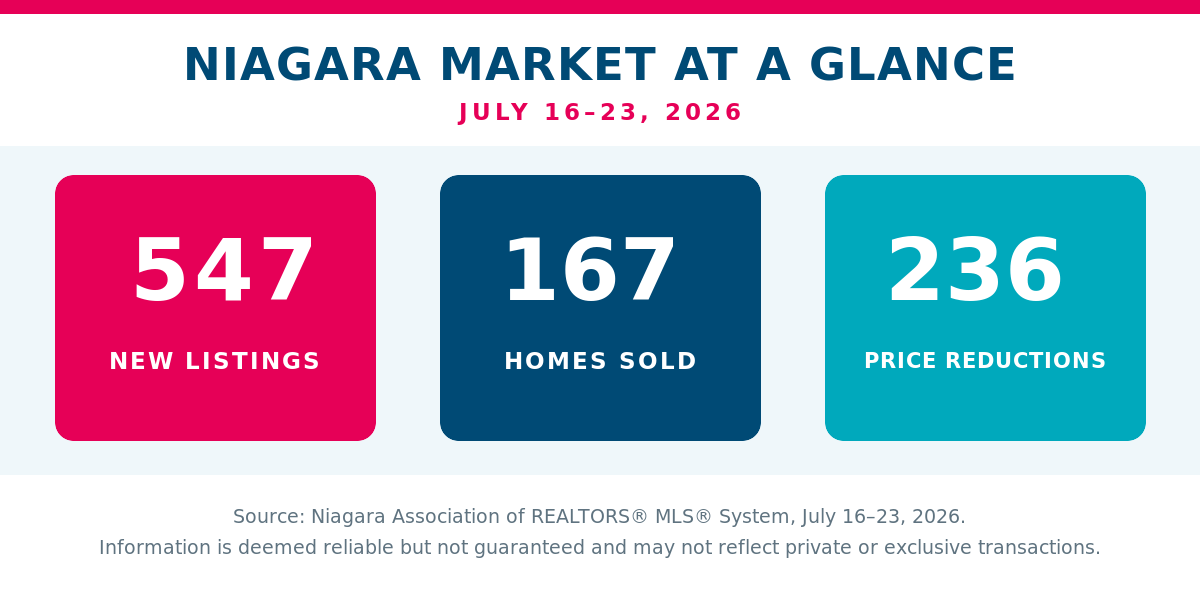
From July 16 to July 23, Niagara saw 547 new listings, 167 sales and 236 price reductions.
These numbers aren’t a direct sell-through calculation—the homes that sold may have been listed weeks earlier—but they clearly show a market with more competition, longer selling times and more price adjustments.
In practical terms, only approximately one-quarter of listings are securing a sale quickly. The others may need more time, a price adjustment, a new marketing strategy or a complete relaunch.
For years, it was completely common for a property to remain on the market for several weeks or even months. Some listings expired without selling. Sellers would pause, adjust their expectations, make improvements or relist with a different strategy.
An expired listing didn’t automatically mean there was something wrong with the house—or that the real estate market was collapsing. It simply meant the right combination of price, condition, presentation, timing and buyer demand hadn’t come together yet.
The fast-paced market of recent years changed people’s expectations. Homes were selling within days, buyers were competing aggressively and sellers often had very little preparation to do.
That was not a typical real estate market.
What This Means for Sellers
Today’s buyers have more options, so they can afford to be selective. They are comparing price, location, condition, monthly carrying costs and future repair needs.
That makes the first impression of a listing especially important.
A home that is priced realistically, presented well and marketed properly can still attract serious buyers. A home that enters the market too high may sit longer and eventually require a price adjustment.
A price reduction is not necessarily a failure. It is information from the market. The important question is whether the seller recognizes that information and adjusts the strategy appropriately.
Sellers should also remember that active listings are the competition, not evidence of value. Recent comparable sales provide a much clearer picture of what buyers are currently willing to pay.
What This Means for Buyers
Buyers generally have more time and more choice than they did during the busiest years.
That means there may be opportunities to negotiate on price, closing date, conditions or included items, particularly when a home has been sitting for a while.
However, a longer time on the market does not automatically make a property a bargain. Buyers still need to consider recent comparable sales, the home’s condition and the complete cost of ownership.
Well-priced, well-maintained homes can still sell quickly. Being prepared remains important when the right property appears.
The Bottom Line
The Niagara market has not stopped. It has simply become more balanced, more selective and more strategic.
Homes are taking longer to sell. Price reductions are more common. Some listings will expire.
None of that is unusual.
A normal market doesn’t mean every property sells. It means the right properties sell when price, presentation and buyer expectations line up.
Whether you are buying, selling or still six to eighteen months away from making a move, the most useful information will always come from your specific neighbourhood and price range—not a dramatic headline about the entire market.
Let’s Look at Your Market
Wondering what these numbers mean for your neighbourhood?
I can prepare a more useful snapshot based on your area, property type and price range.
Not intended to solicit those under contract.